Saturday, 6 August 2011

Tuesday, 12 July 2011
A Lesson
GOD & LAWN CARE
God said: "Frank, you know all about gardens and nature. What in the world is going on down there on the planet? What happened to the dandelions, violets, milkweeds and stuff I started eons ago? I had a perfect no-maintenance garden plan. Those plants grow in any type of soil, withstand drought and multiply with abandon. The nectar from the long-lasting blossoms attracts butterflies, honey bees and flocks of songbirds. I expected to see a vast garden of colors by now. But, all I see are these green rectangles."
St. FRANCIS:
It's the tribes that settled there, Lord. The Suburbanites. They started calling your flowers 'weeds' and went to great lengths to kill them and replace them with grass.
GOD:
Grass? But, it's so boring. It's not colorful. It doesn't attract butterflies, birds and bees; only grubs and sod worms. It's sensitive to temperatures. Do these Suburbanites really want all that grass growing there?
ST. FRANCIS:
Apparently so, Lord. They go to great pains to grow it and keep it green. They begin each spring by fertilizing grass and poisoning any other plant that crops up in the lawn.
GOD:
The spring rains and warm weather probably make grass grow really fast. That must make the Suburbanites happy.
ST. FRANCIS:
Apparently not, Lord. As soon as it grows a little, they cut it-sometimes twice a week.
GOD:
They cut it? Do they then bale it like hay?
ST. FRANCIS:
Not exactly, Lord. Most of them rake it up and put it in bags.
GOD:
They bag it? Why? Is it a cash crop? Do they sell it?
ST. FRANCIS:
No, Sir, just the opposite. They pay to throw it away.
GOD:
Now, let me get this straight. They fertilize grass so it will grow. And, when it does grow, they cut it off and pay to throw it away?
ST. FRANCIS:
Yes, Sir.
GOD:
These Suburbanites must be relieved in the summer when we cut back on the rain and turn up the heat. That surely slows the growth and saves them a lot of work.
ST. FRANCIS:
You aren't going to believe this, Lord. When the grass stops growing so fast, they drag out hoses and pay more money to water it, so they can continue to mow it and pay to get rid of it.
GOD:
What nonsense. At least they kept some of the trees. That was a sheer stroke of genius, if I do say so myself. The trees grow leaves in the spring to provide beauty and shade in the summer. In the autumn, they fall to the ground and form a natural blanket to keep moisture in the soil and protect the trees and bushes. It's a natural cycle of life.
ST. FRANCIS:
You better sit down, Lord. The Suburbanites have drawn a new circle. As soon as the leaves fall, they rake them into great piles and pay to have them hauled away.
GOD:
No!? What do they do to protect the shrub and tree roots in the winter to keep the soil moist and loose?
ST. FRANCIS:
After throwing away the leaves, they go out and buy something which they call mulch. They haul it home and spread it around in place of the leaves.
GOD:
And where do they get this mulch?
ST. FRANCIS:
They cut down trees and grind them up to make the mulch.
GOD:
Enough! I don't want to think about this anymore. St. Catherine, you're in charge of the arts. What movie have you scheduled for us tonight?
ST. CATHERINE:
'Dumb and Dumber', Lord. It's a story about....
GOD:
Never mind, I think I just heard the whole story from St. Francis
God said: "Frank, you know all about gardens and nature. What in the world is going on down there on the planet? What happened to the dandelions, violets, milkweeds and stuff I started eons ago? I had a perfect no-maintenance garden plan. Those plants grow in any type of soil, withstand drought and multiply with abandon. The nectar from the long-lasting blossoms attracts butterflies, honey bees and flocks of songbirds. I expected to see a vast garden of colors by now. But, all I see are these green rectangles."
St. FRANCIS:
It's the tribes that settled there, Lord. The Suburbanites. They started calling your flowers 'weeds' and went to great lengths to kill them and replace them with grass.
GOD:
Grass? But, it's so boring. It's not colorful. It doesn't attract butterflies, birds and bees; only grubs and sod worms. It's sensitive to temperatures. Do these Suburbanites really want all that grass growing there?
ST. FRANCIS:
Apparently so, Lord. They go to great pains to grow it and keep it green. They begin each spring by fertilizing grass and poisoning any other plant that crops up in the lawn.
GOD:
The spring rains and warm weather probably make grass grow really fast. That must make the Suburbanites happy.
ST. FRANCIS:
Apparently not, Lord. As soon as it grows a little, they cut it-sometimes twice a week.
GOD:
They cut it? Do they then bale it like hay?
ST. FRANCIS:
Not exactly, Lord. Most of them rake it up and put it in bags.
GOD:
They bag it? Why? Is it a cash crop? Do they sell it?
ST. FRANCIS:
No, Sir, just the opposite. They pay to throw it away.
GOD:
Now, let me get this straight. They fertilize grass so it will grow. And, when it does grow, they cut it off and pay to throw it away?
ST. FRANCIS:
Yes, Sir.
GOD:
These Suburbanites must be relieved in the summer when we cut back on the rain and turn up the heat. That surely slows the growth and saves them a lot of work.
ST. FRANCIS:
You aren't going to believe this, Lord. When the grass stops growing so fast, they drag out hoses and pay more money to water it, so they can continue to mow it and pay to get rid of it.
GOD:
What nonsense. At least they kept some of the trees. That was a sheer stroke of genius, if I do say so myself. The trees grow leaves in the spring to provide beauty and shade in the summer. In the autumn, they fall to the ground and form a natural blanket to keep moisture in the soil and protect the trees and bushes. It's a natural cycle of life.
ST. FRANCIS:
You better sit down, Lord. The Suburbanites have drawn a new circle. As soon as the leaves fall, they rake them into great piles and pay to have them hauled away.
GOD:
No!? What do they do to protect the shrub and tree roots in the winter to keep the soil moist and loose?
ST. FRANCIS:
After throwing away the leaves, they go out and buy something which they call mulch. They haul it home and spread it around in place of the leaves.
GOD:
And where do they get this mulch?
ST. FRANCIS:
They cut down trees and grind them up to make the mulch.
GOD:
Enough! I don't want to think about this anymore. St. Catherine, you're in charge of the arts. What movie have you scheduled for us tonight?
ST. CATHERINE:
'Dumb and Dumber', Lord. It's a story about....
GOD:
Never mind, I think I just heard the whole story from St. Francis
Wednesday, 6 July 2011
Snake eggs

Nature has a way of working out her own balance,pharmaceutical company's would have you believe that they are the only ones that have solutions to problems, be it mice, slugs, aphids or flea beetle, big pharma has the cure.
Well so does mother nature, today's find was a large clutch of grass snakes eggs, in fact it looks as though it is probably two clutches of eggs together, these when they hatch and grow will feed on the mice and voles which are being a real pain in the garden.
Also found today were a couple of lizard eggs, great to control small slugs and aphids. There is also have a great population of both the common toad, the midwife toad and we think also the natter-jacks, there are also two permanent pool frogs who live in the pond.
So who needs big pharma?
Cloudscapes


We had a drive up into the mountains mainly to get away from the intense heat although we live at an altitude of 620mts a few extra metres makes a lot of difference, I use the term a few lightly, the mountain we explored was in fact 1000mts. The air was cool, well actually it was cold and blowing a gale but it was refreshing.It did try to rain, without success although there were plenty of storm clouds but it was beautiful and made for some nice photos.
Thursday, 30 June 2011
Bridges, Newts and Stork nests.




Now that we have a lot of spare time on our hands we are taking advantage and are able to visit both friends and places of interest, we visited Paza De Tor near Monforte de Lemos with friends on Tuesday. This is a lovely, very old manor house dating back some five hundred years, it has some interesting pieces of furniture, and I sure it also has wonderful paintings, these however are so dirty it is impossible to see them clearly. There is no charge to visit the house and is maintained by the government, I'm sure that if a voluntary donation box was provided for the restoration of these paintings the funds would soon be available. Unfortunately there are no photo's to show as it is prohibited, but any one in the area and interested in old buildings it is well worth a visit.
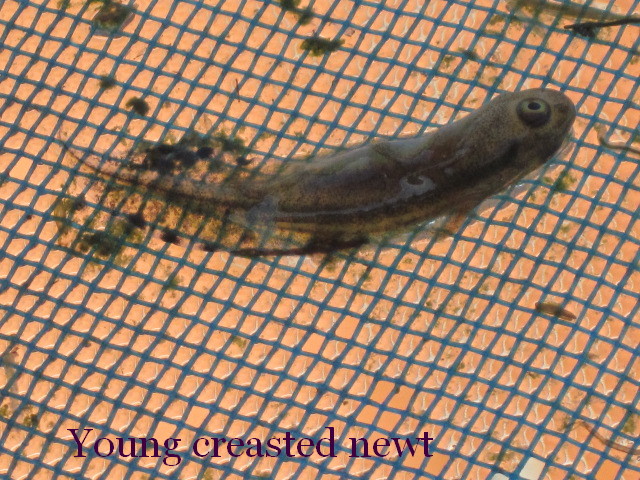
Wednesday was another day out with friends and we got to see the old bridge and old road over the Mino between O Savinao and Taboada, the lack of water in the river is due to work on the hydro electric dam near Chantada. It was then back to our friends house to view the crested newts which have taken up residence in their swimming pool, this has given them a problem as these newts are a protected species, not helpful when you want to clean out and use your swimming pool.
We then found a storks nest which gives new meaning to high rise living, by the size of the nest however it has clearly been in use for a number of years.
Monday, 27 June 2011
30 degrees and rising


Yet another very close forest fire today, despite having had a big thunder storm last night and some heavy rain it hasn't stopped fire. This one is very close and the helicopters have recharged their water bombs from the water deposit tank in what was our field. The geese and goats are quite alarmed by these big noisy birds, the hens are terrified, it is quite likely to stop them laying for a while.
Many of the fires in Galicia are stared quite deliberately, we had an email from a friend on the coast yesterday, she lives in Pontevedra, they had seventy fires in just one day, most started deliberately, and for reasons best known to the government they have reduced the distance of trees from property.
We just hope that with the fire fighters taking the water from the water tank that some of the amphibious life living there remains.
Tuesday, 21 June 2011
Samos


We always enjoy a visit to Samos, it is on the Pilgrim route and has a large Monastery situated beside a river as many monastery's are.
It was nice to see that the goose population had increased we are assuming that they have had young.
It was also interesting to see how much the new orchard, planted only a couple of years ago has grown. The trees were only whips, this year many are bearing fruit.
The livestock kept by the Monastery also seems to have increased, with a couple of very beautiful long horn cattle, I'm not sure what breed they are but they are superb, and a mare with donkey foal.
It was however sad to see the medicinal garden overgrown and neglected. We had on one of our previous visits met a very elderly monk, in his late eighties who explained to us with great pride that the gardens were his responsibility and that he grew all the vegetables for the Monastery, seeing the medicinal garden so overgrown we suspect he is no longer able to do the work, or maybe he is no longer with them.
Subscribe to:
Posts (Atom)